


A Lifelong Dream
A Living Nightmare… Almost
I began my teaching career halfway through the school year as a long-term substitute for a 4th grade classroom. I had the honor of spending the first several weeks shadowing the teacher I would be taking over for, learning her routines, discipline policies/strategies, classroom management strategies, end of year goals, and the general environment of the class. By the end of the first week, I was feeling confident!
“I can do this!”
Nothing… and I mean NOTHING prepared me for when she left. The day before she went on maternity leave, she gave a beautiful “hand off” speech. Then suddenly the world seemed to stand still as she walked out the door. What followed was a silence that I’ve never heard before. We all stared at the door, frozen in time as our fearless leader, class mom, mentor, guide just LEFT US… ALONE!
In slow motion twenty-two 4th grade heads turned towards me. I stared back. I wanted to scream, “WHAT DO WE DO NOW!” …. But that felt unprofessional. For several seconds we just sat for a quiet moment. I didn’t know what to say.
Time.
I knew I needed to somehow slow down time.
That’s when I realized that we needed to just sit. Sit and let them ask questions until THEY were finished.
That’s when I learned the power of taking a moment.
Choices a Structured Sense of Control:
Listening to Know How to Help
As the students asked question after question,
I realized a common theme: fear of the unknown.
“Will you move that tree?”
In my mind I thought, what a strange question. Why would students care if I moved a tree? Then I realized that even in comparison to the tree, I was still the greatest obstacle.
The tree stood in a predictable place. Did it have any real significance? No. But it represented consistency. Like most humans, children thrive on consistency, predictability, and structure. A change in educators, changed what they had known to an unknown. A new “class mom” was stepping into the role.
I looked at each student and said, “How about I make you all a deal. I know I’ll do somethings differently, I’ll probably change somethings, but I PROMISE that I won’t change or move anything without talking to you about it first. If you say ‘no,’ it’s ‘no.’ If we agree to move it TOGETHER then I’ll make that change.”
For the rest of the semester, I made sure to stick to that rule. Desks arrangements, schedules, plants, my teacher chair, anything, I asked the students first.
That is the value of listening to students, you get to understand how best to compromise.
The Value of Student Choices:
Voices and Choices
Now you may be thinking, why does that even matter? Well, think of the last time something changed in Target. You may stand in that spot and think, “I swear that sweater was RIGHT here the last time I was in this store.”
You know that unsettling feeling of change? Some of people do really well with change, we can roll with the punches. Others of us may completely boycott the company all together, demand answers, or feel overwhelmed by the changes.
Kids often respond the same way. Giving children voice and choice helps alleviate some anxiety and fear. Choice gives students a voice in a situation that they had no control over. I took that lesson to heart and applied it with every class afterwards.
“I See You…”
- To give voice to a child means you are saying that their concerns matter.
- To give voice to a child means you are saying that their anxieties are real.
- To give voice to a child means you are saying that they are important.
- They are valuable.
- They are seen.
- They can problem solve.
- They can use their courage.
5 Practical Student Choices:
Find ways to Say Yes:
- Student Care Basket- Create a basket of student necessities: bandaids, tissues, lotion, hand sanitizer, etc. This allows for children to have access to their most basic needs without fear of a teacher saying, “no.”
- In and Out Board- Design a student “In and Out” board for students to go to the bathroom, water, and self-regulation walk. This allows for students to be in tune with their physical and emotional needs. Facilitate conversations about time management, best times to go to the bathroom, how to re-enter the classroom, and strategies for regulating their emotions. Set clear boundaries with the students that if they misuse this freedom, it can be individually taken away.
- Academic Free Choice- No child is ever too young for “Free Choice!” Create activities, or choice boards, that incorporate academic tasks. “Today you must complete these 3 tasks: math fact activity with a friend, math worksheet, read for 30 minutes, write the next paragraph of your essay, and clean your desk. You choose the order you want to complete those tasks, but you won’t be able to join us for the movie if those tasks are not completed.”
- Schedule Check In- Every quarter, check in with the students about the daily schedule/structure. Inform them that there are certain things that can absolutely not change, but there are other ways that we can work together to create a better flow if necessary. For example, one year my first graders suggested that they would like to have math stations after writing instead of independent reading. We voted as a class, and we determined that it would be a very easy change… they LOVED it!
- Ask students to vote on the party!
Conclusion
When we as teachers decide to stop. Listen. Respond (not react). We learn much more about the depth of our children’s needs, goals, desire, and fears.
Sure, sometimes they can miss the mark slightly, but 99% of the time they come up with ideas or suggestions that I already had in mind. “Well, what a great idea! I LOVE it!”
Choices are good for children.
There is power in listening to children and their needs!
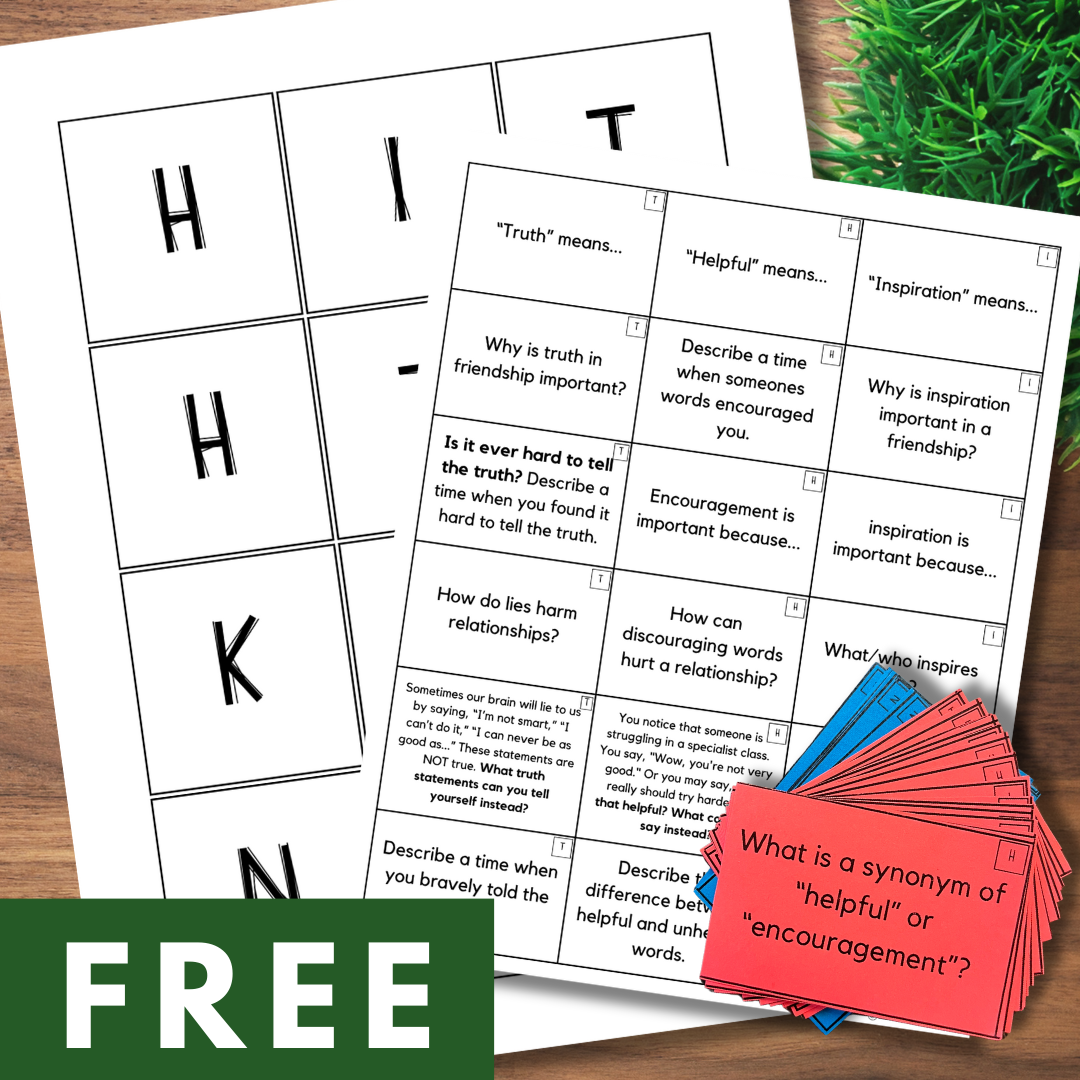
Free T.H.I.N.K. Classroom Activity Guide
Identify what is True, Helpful, Inspiring, Necessary, and Kind in this interactive board game.
Get your free classroom activity by joining the email list below.
About the Author
As an elementary teacher for over a decade, and having a MA in Professional Counseling, I value creating effective resources for you to enjoy in the classroom. My goal is to ensure that you can trust that the material is ready to use, easy to implement, and produces positive classroom results.

 Treasured and Loved, LLC
You must be logged in to post a comment.