

What’s Your Superpower?
What is a Hero?
I asked a student what their superpower would be, and his answer was “My dad. I would want my dad to be able to teleport to any problem I was having and come fight the bad guys for me.”
Who is your hero? What characterizes a hero? For some children, YOU are their hero.
You can walk into any home goods store and find a plaque, poster, or keychain that holds the teacher mantra “I teach… what’s your superpower?” Teaching is a unique calling, one that deserves great recognition (and compensation).
Teaching is a hero’s job.
People are drawn to stories of rescue, daring expeditions, and courageous life altering crusades. There’s something hopeful in the idea that someone will be there to defend and protect at all costs. There’s also something hopeful in the idea that most heroes were once normal people. Thus, giving the belief that a “hero” can be anyone.

We All Need Heroes:
During WWII, Jack Kirby created Captain America to bring hope to the American people. Captain America became a symbol of courage in the face of adversity. He demonstrated the act of never giving up and standing for truth, even when everything around you feels hopeless. Most importantly, he proved that anyone can be a hero.
In 2014, a young 17-year-old girl, stood before thousands as a visual representation of resiliency. Malala Yousafzai became a modern-day superhero for her courage in advocating for educational equality. In the face of danger, she boldly proclaimed for lawmakers, citizens, witnesses, and readers to join her in being the voice for the voiceless. Because of Malala’s perseverance and bravery, reformation for educational rights were seen around the world. She is a hero.
Stories of heroes let us know that our experiences are valid. Heroes let inspire us to persevere. Heroes tell us that we can courageously tell our story.
Children Are Still Developing Their Superpowers:
One of the greatest fallacies is in thinking that children come to school as empty slates. It is naïve to think that children are able to set their home life, evenings, unknowns, aside to get in the “school mindset.”
Children are amazingly resilient people.
Children come to school with the weight of trauma, anxiety, fears, unknowns on their shoulders. Therefore, it is vital to first provide children with their most basic needs, before demanding academic success. When a child’s basic needs of food, safety, clothing, respect, and relationships are met, it increases their academic success. However, many teachers believe that academic success needs to be established first.
I don’t know about you, but I have a hard time concentrating when I’m hungry.
I don’t’ know about you, but it’s hard for me to sit through a staff meeting when I think about the sick kids, grocery shopping, dying grandparent, or suffering friend in my personal life.
I don’t know about you, but it’s hard for me to just “turn off” my anxiety during an evaluation because someone says to focus more on the task at hand.
The same is true of our students.
Thank you for providing safety within your classroom.
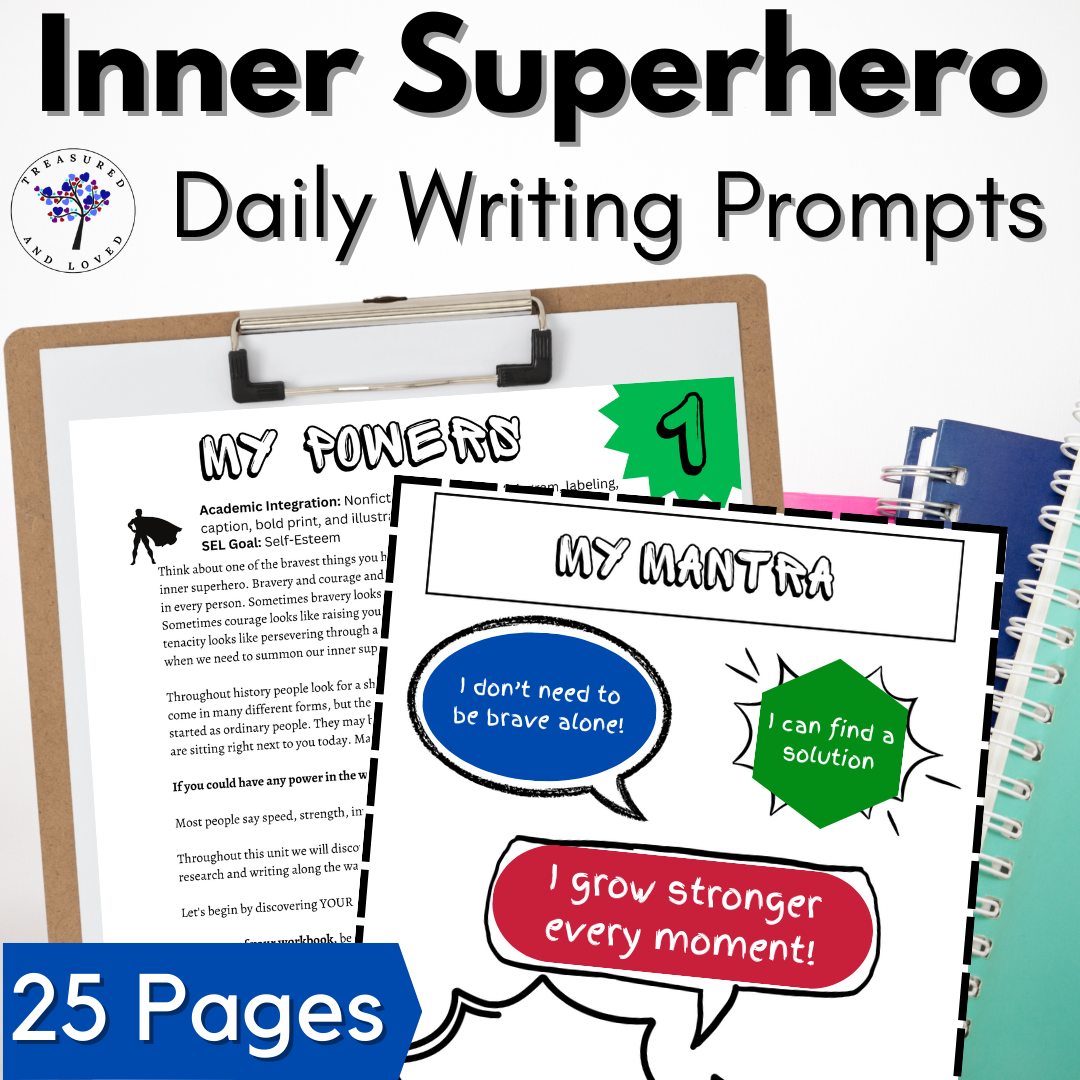
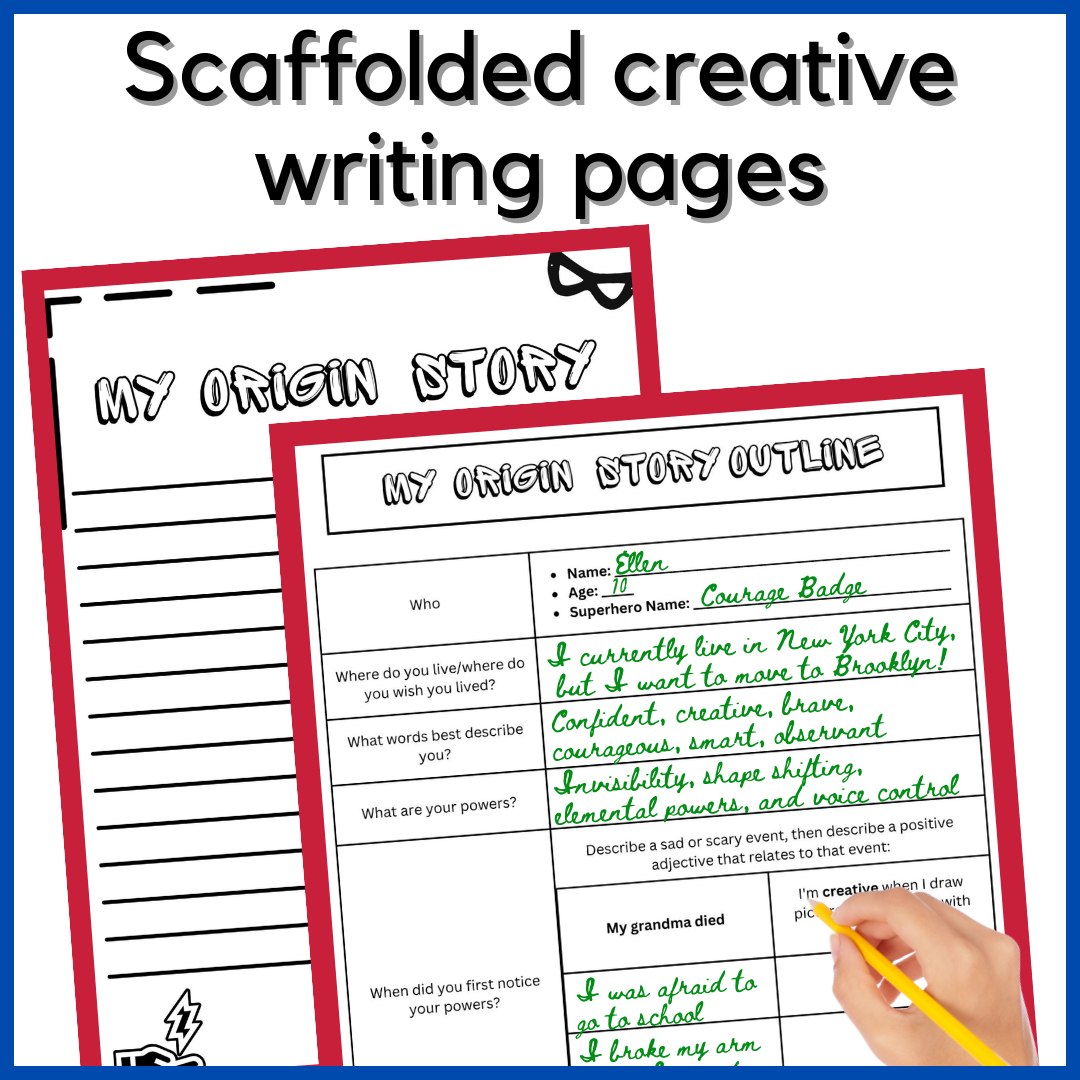
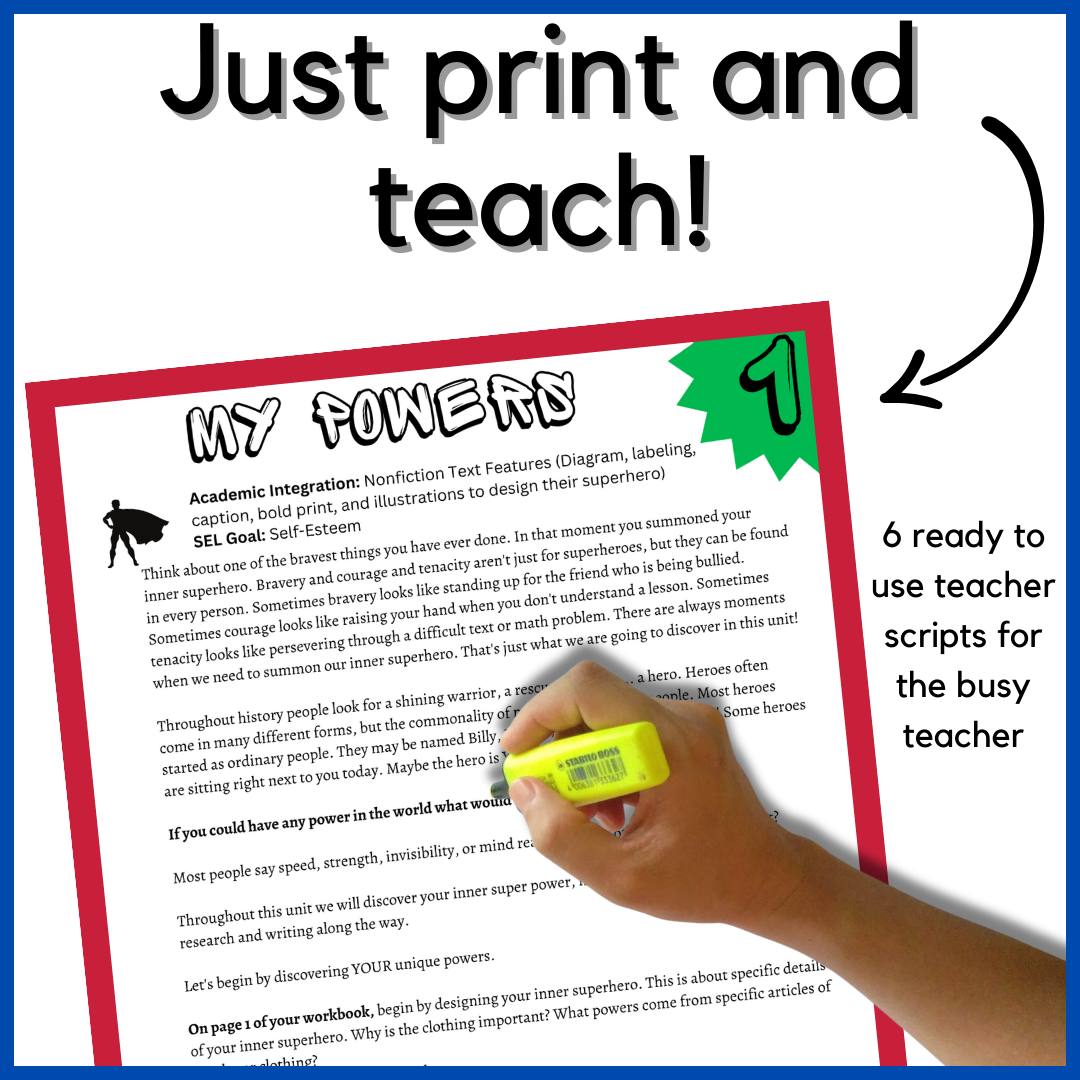
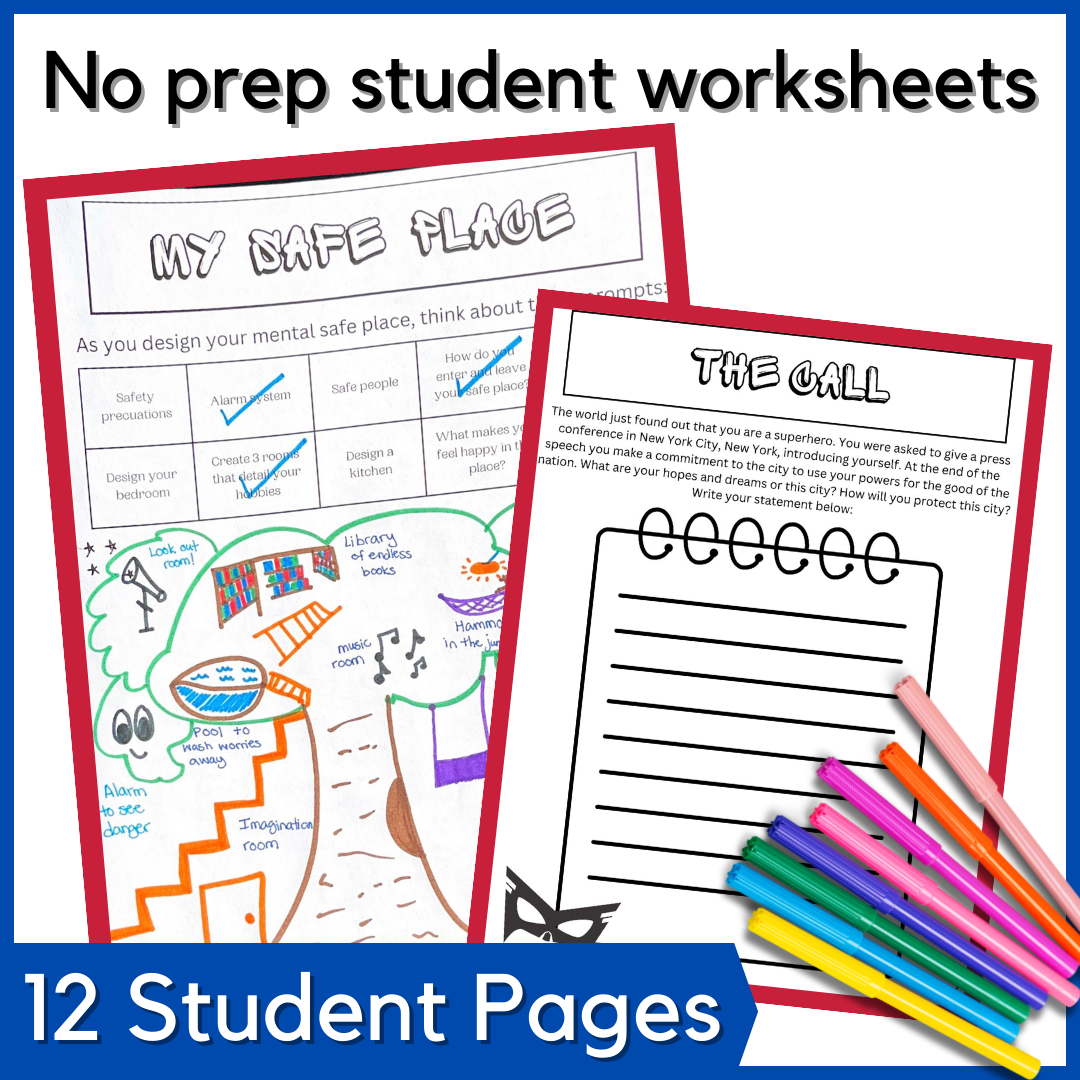
Superpower Writing Prompts
Children need that type of courageous-daring-hopeful belief. While we know that superheroes are not real, they do represent a deeper longing for a savior… for hope. Children should see themselves in the story of a hero.
This is where I can help! Inspire your elementary students to think about their superpowers: courage, perseverance, hope, identity, etc. through this ready made resource. You will find no prep student worksheets, graphic organizers, and discussion guides. This is a great way to build your students’ self-esteem… and sneak in a little bit of personal narrative writing in the process!
So the next time you are wanting to engage students in conversation, ask them, “What’s your superpower?”
FREE
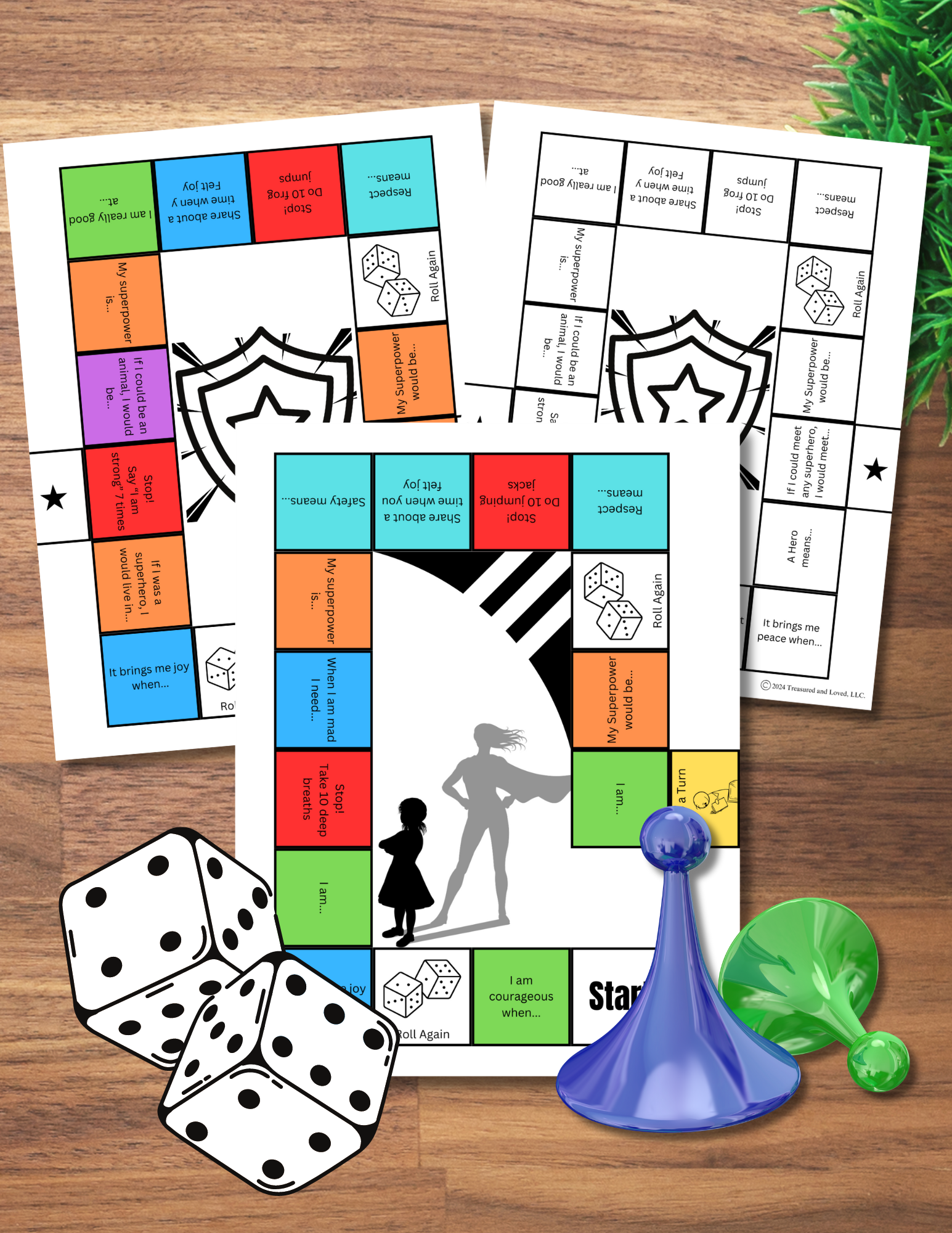
Classroom Superhero Game
Interactive Social Emotional Learning game for engaging student conversation. Perfect for small group activities.
About the Author
As an elementary teacher for over a decade, and having a MA in Professional Counseling, I value creating effective resources for you to enjoy in the classroom. My goal is to ensure that you can trust that the material is ready to use, easy to implement, and produces positive classroom results.

 Treasured and Loved, LLC
You must be logged in to post a comment.